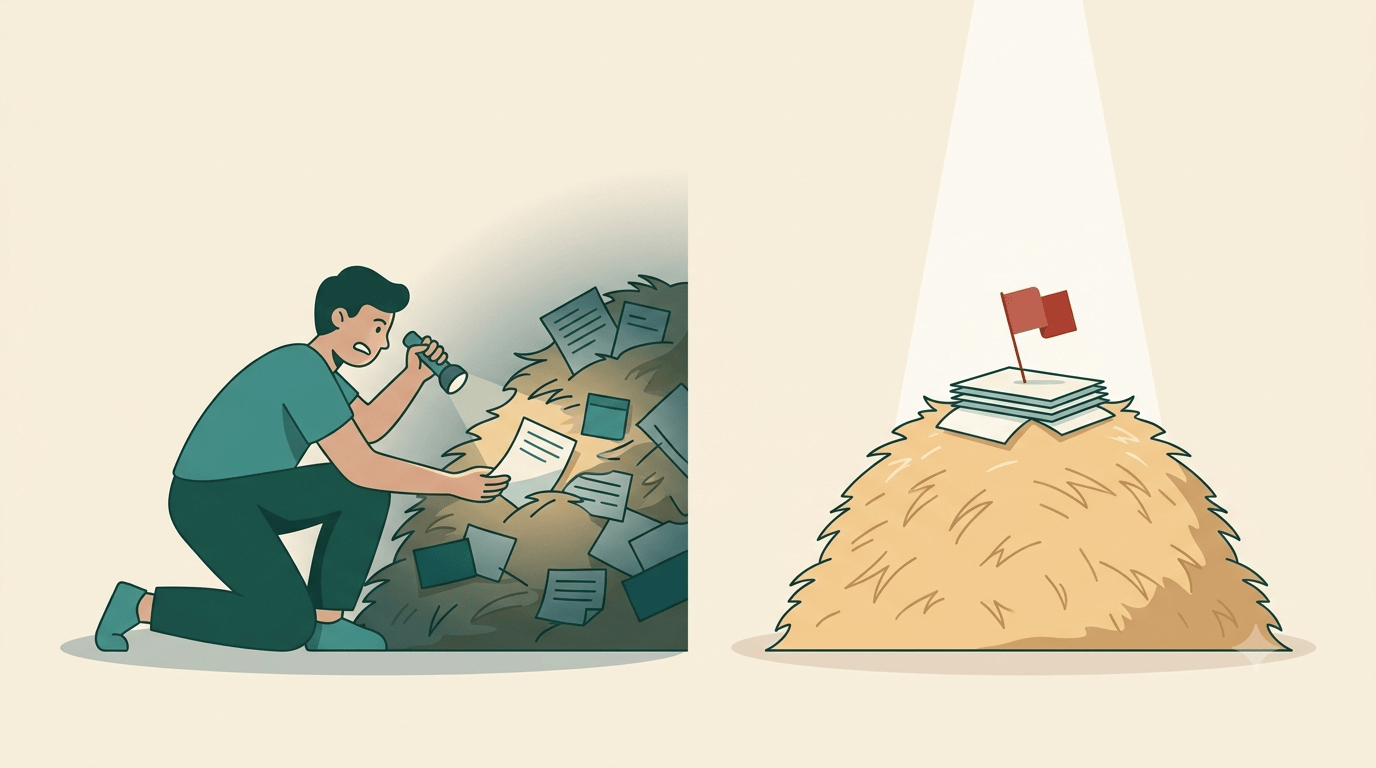
A split illustration: on the left, in shadow, a person digs through a haystack of scattered papers with a flashlight, hunting; on the right, a spotlight shines down on a neat stack of pages topped with a red flag, already surfaced

Pull vs Push: The Two Kinds of Project Tool

Here’s a lens that, once you have it, you can’t put down. Every project tool ever made falls into one of two camps. Not by price, not by how many views it has, not by which team it’s aimed at, but by one thing: what happens when you want to know what’s falling behind.

In the first camp, the answer exists somewhere inside the tool, and it’s your job to go get it. In the second, the tool works the answer out and hands it to you. Call them pull and push. Sort any tool you’ve used into those two buckets and something uncomfortable becomes obvious: almost the entire category is pull, and the push side is nearly empty.
July 15, 2026 · 6 min · SRP Team
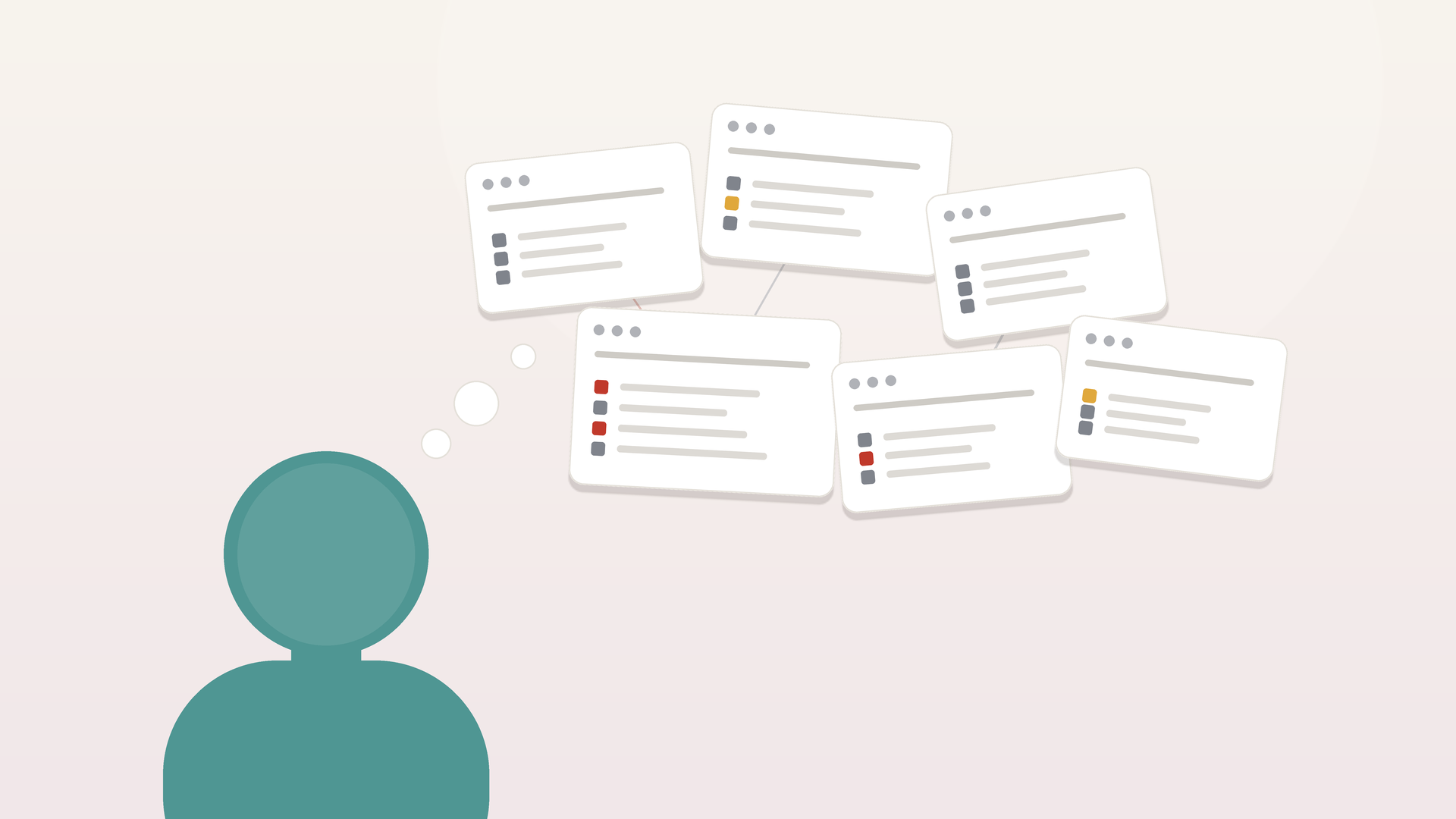
A single person with a thought bubble rising into a scattered cluster of project boards, several flagged with red and amber at-risk markers

When You're the System: The Living-Memory Problem

Ask a good project lead how they catch work before it slips, and the honest answer is often three words: I just know.

They know the client that goes quiet before it cancels. They know which task has been “nearly done” for a suspiciously long time. They know that when a particular developer stops commenting on a ticket, it usually means he’s stuck and hasn’t said so yet. None of this is written down. It lives in one person’s head, refreshed every morning by scanning boards and reading between the lines. It works. That’s the trap.

July 9, 2026 · 5 min · SRP Team
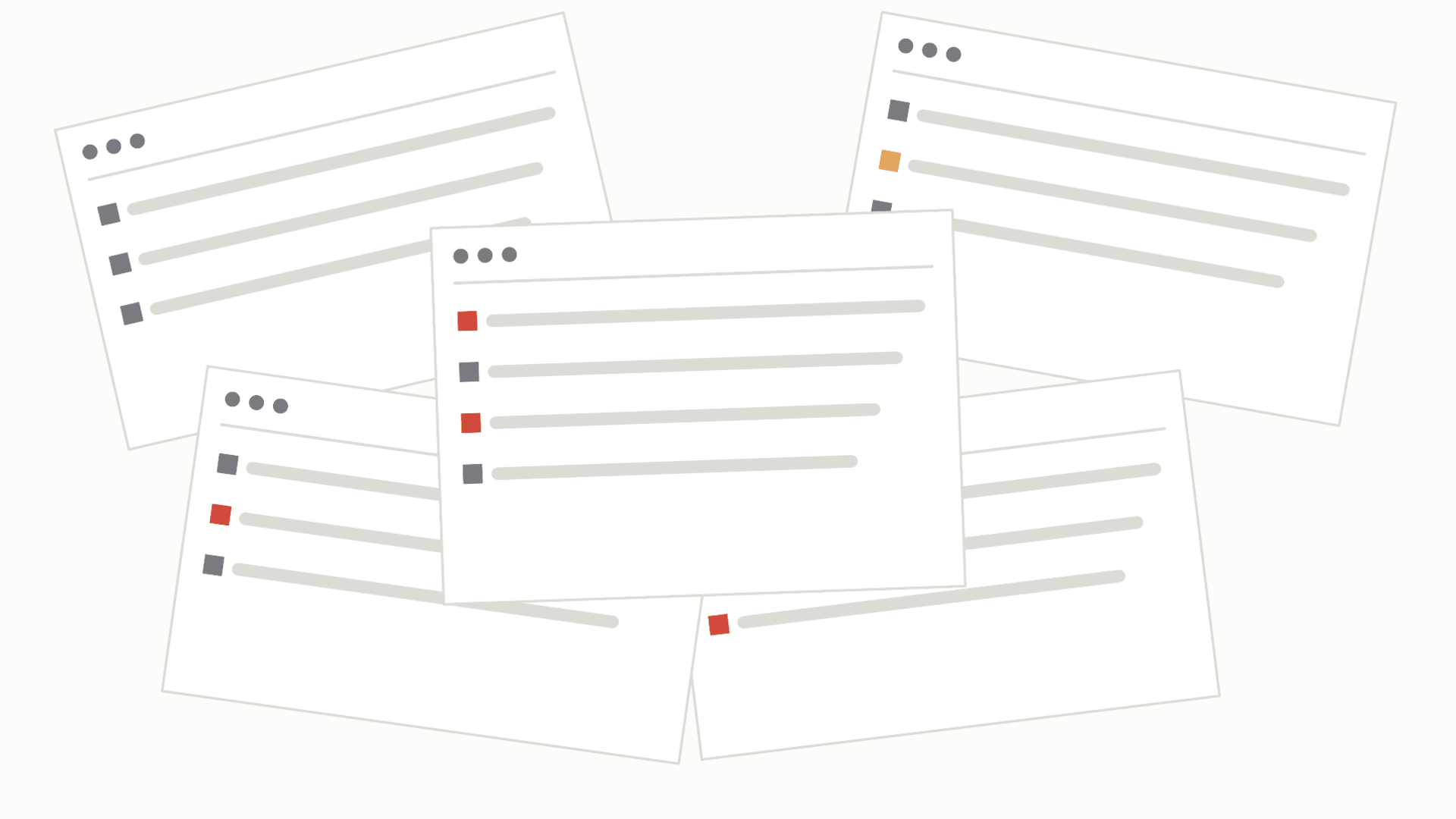
A scattered pile of overlapping project boards, the one in front flagged with red at-risk markers

Why Project Management Tools Break Down at Scale

Every project tool works at ten tasks.

One project, one team, ten things to do. You can see the whole thing at a glance, and nothing slips without you noticing. So you buy in. Then the work grows: more projects, more people, more tools in the mix. And somewhere along that curve you realize you’ve quietly become the tool’s query engine, scanning boards every morning, remembering which project was fragile last week, holding the whole risk map in your head because the software won’t hold it for you.

That’s not project management. That’s you doing unpaid labor for software that was supposed to do it for you.

July 4, 2026 · 5 min · SRP Team
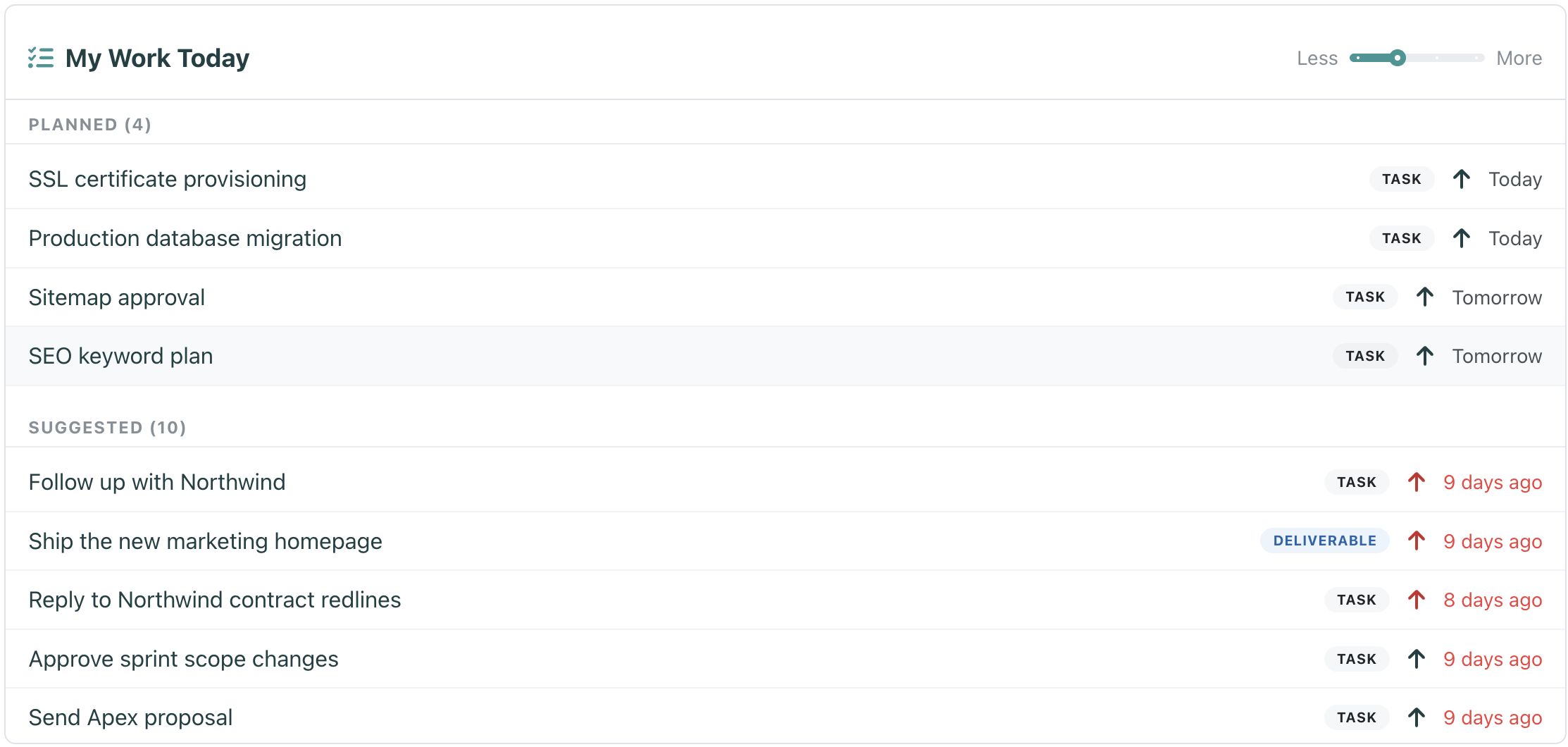
The My Work Today widget on the SRP dashboard, with Planned and Suggested sections and a Less-to-More density slider

Plan your day with My Work Today

Every morning starts with the same small ritual. You open your work, look at everything you could possibly do, and try to decide what you will actually do. For most tools that means scanning a few boards, eyeballing due dates, and holding the plan in your head until lunch undoes it.

We wanted that ritual to take ten seconds, not ten minutes. So we built My Work Today, a new widget that lives right on your dashboard.

June 20, 2026 · 2 min · SRP Team

What Does “Blocked” Actually Mean?

A task marked as blocked tells you something is stuck.

But it does not always tell you why.

That is a problem, because “blocked” can mean very different things depending on the situation.

One task may be blocked because a client has not replied. Another may be blocked because a teammate is unavailable. Another may be waiting for a decision, missing information, or depending on work that has not been finished yet.

In all of those cases, the task is blocked.

But the way you unblock it is not the same.

May 22, 2026 · 6 min · SRP Team

Overdue Is Too Late: How to Spot Work That Is Falling Behind Earlier

Most teams already know when work is overdue.

The deadline passes. The task turns red. Someone asks, “What happened here?”

That is useful, but it is also late.

By the time work is overdue, the team has usually already paid the price: a delayed client update, a rushed handoff, a missed dependency, a frustrated teammate, or a meeting where everyone tries to reconstruct what went wrong.

The harder problem is not knowing what is overdue.

The harder problem is knowing what is starting to fall behind before it becomes a problem.

May 21, 2026 · 5 min · SRP Team

The Status Meeting Is a Symptom, Not a Solution

Every team knows the meeting.

  • “Where are we with this?”
  • “Is that still blocked?”
  • “Who owns this?”
  • “Wasn’t this supposed to be done last week?”
  • “Did the client ever reply?”

The meeting is usually called a status meeting, but most of the time it is not really about status.

It is about uncertainty.

The team does not know what is stuck. The manager does not know what is falling behind. The client does not know what has changed. So everyone gets pulled into a meeting to reconstruct the truth from memory, chat messages, task comments, and half-updated boards.

That is not coordination.

That is archaeology.

May 16, 2026 · 4 min · SRP Team

Why Small Teams Don’t Need More Tasks — They Need to Know What’s Falling Behind

Most small teams do not lose control because they forgot how to create tasks.

They lose control because the important work becomes invisible.

A task is overdue, but buried in a board. A client is waiting, but nobody sees it. A blocker exists, but only one person knows. A deadline is close, but the team notices too late.

May 13, 2026 · 1 min · SRP Team