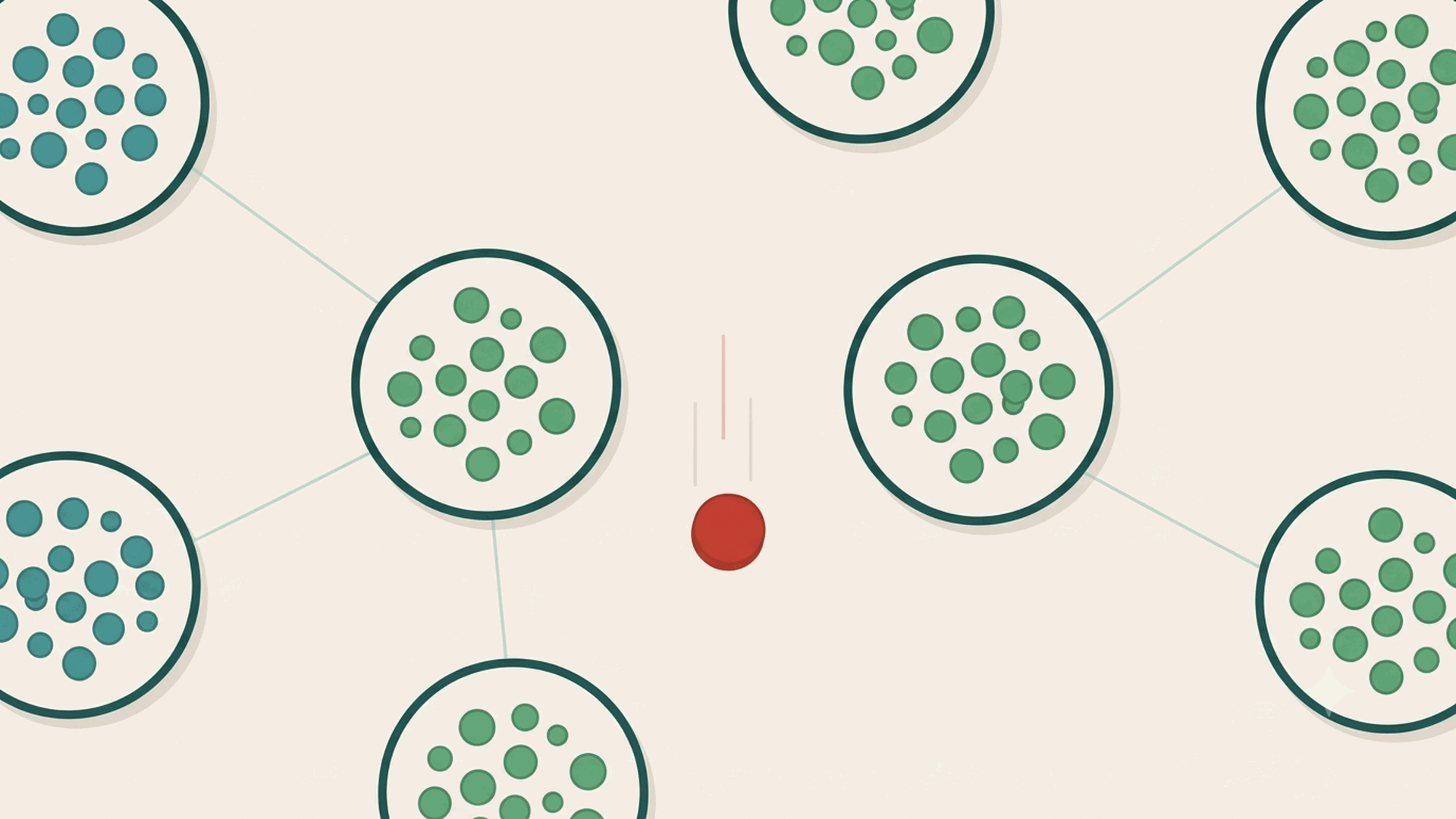
SRP cover: several separate teams shown as circles of dots connected by thin lines, with a red token slipping through the gap between two of them, unwatched.

What Worked on One Team Breaks Across Five

On one team, good ceremony works. The daily standup surfaces what is stuck, refinement keeps the next work ready, the retro fixes what went wrong last time. Run those well and nothing gets left behind, because the team is small enough that the rituals touch every piece of work. Anyone who calls agile ceremony theatre has not seen it done well on a team that needed it.

Then you get handed a second team. And a third. And the thing that quietly breaks is not the ceremony. It is the assumption that it scales.
July 22, 2026 · 4 min · SRP Team
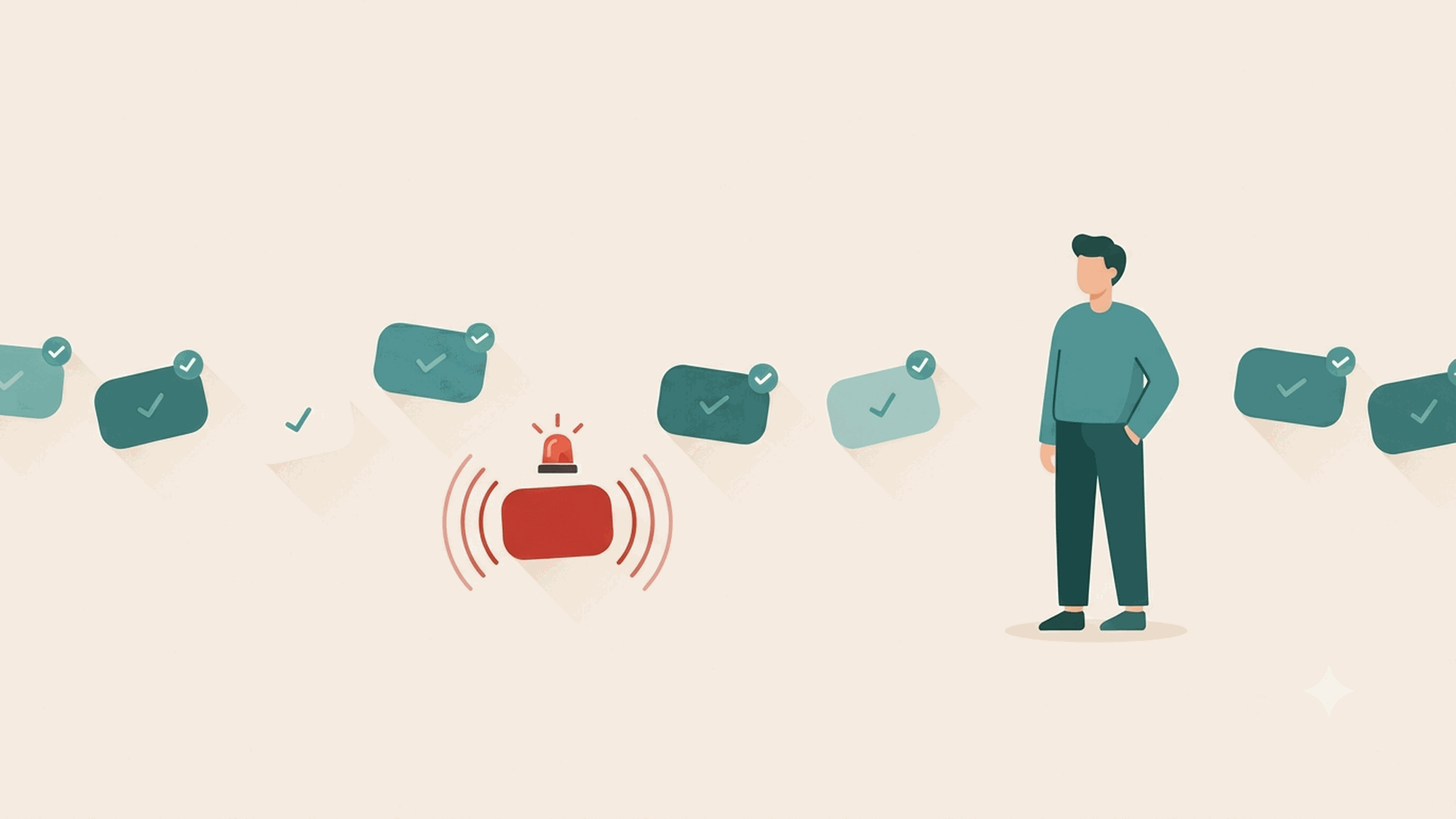
Task cards flow past with green checks, all on track; one has set off a red alarm on its own while a person stands nearby, relaxed and not watching.

Keep the Governance, Kill the Status Report

Every plan to stop projects from slipping arrives as one of two promises, and both let you down. The first is a better tool: buy something powerful enough and the slips stop. They don’t, they just get more places to hide. The second is discipline: train the team, run the governance, keep the register current, and reliability follows. That one is closer to right, and it is where most serious teams land. But it hides a catch that only shows up on a busy Tuesday, because there are two very different things wearing the word governance, and only one of them was ever going to hold.

July 20, 2026 · 4 min · SRP Team
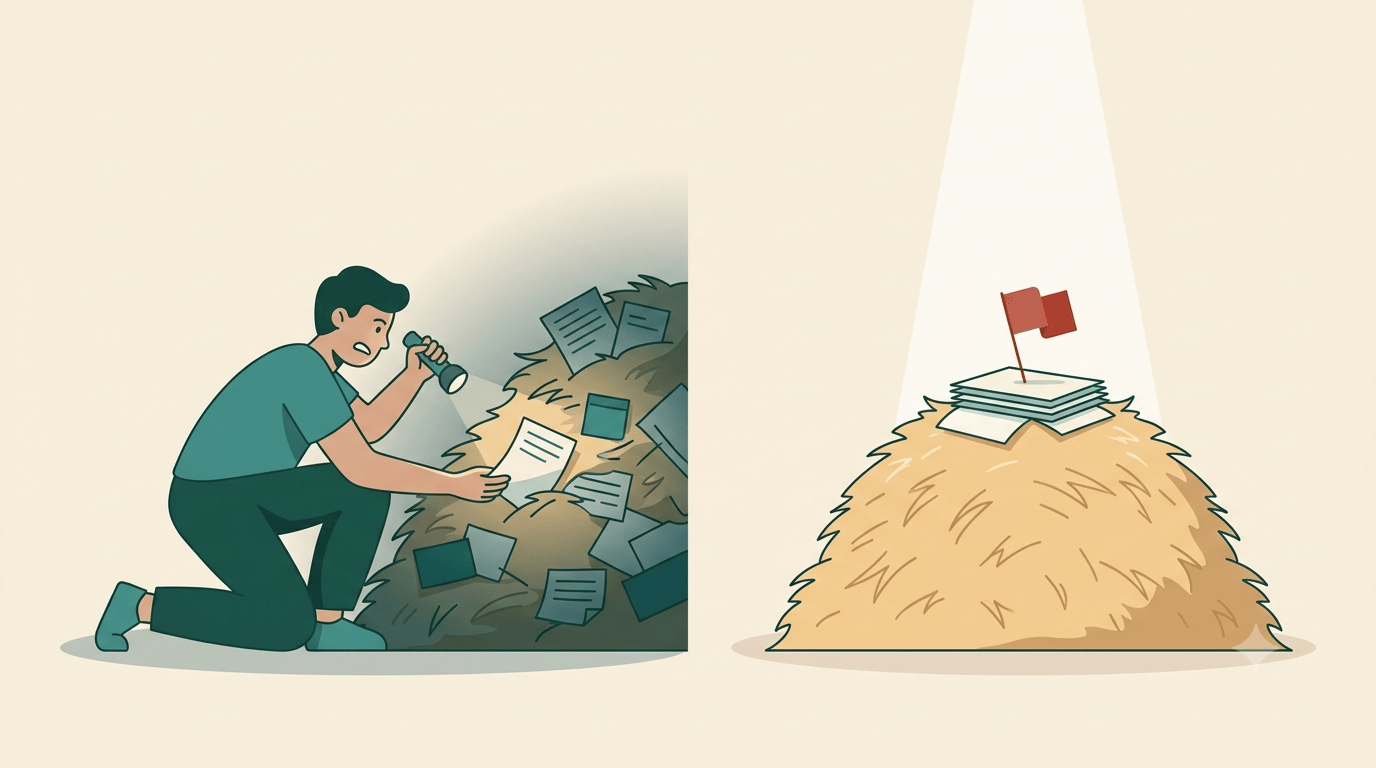
A split illustration: on the left, in shadow, a person digs through a haystack of scattered papers with a flashlight, hunting; on the right, a spotlight shines down on a neat stack of pages topped with a red flag, already surfaced

Pull vs Push: The Two Kinds of Project Tool

Here’s a lens that, once you have it, you can’t put down. Every project tool ever made falls into one of two camps. Not by price, not by how many views it has, not by which team it’s aimed at, but by one thing: what happens when you want to know what’s falling behind.

In the first camp, the answer exists somewhere inside the tool, and it’s your job to go get it. In the second, the tool works the answer out and hands it to you. Call them pull and push. Sort any tool you’ve used into those two buckets and something uncomfortable becomes obvious: almost the entire category is pull, and the push side is nearly empty.

July 15, 2026 · 6 min · SRP Team
A single person with a thought bubble rising into a scattered cluster of project boards, several flagged with red and amber at-risk markers

When You're the System: The Living-Memory Problem

Ask a good project lead how they catch work before it slips, and the honest answer is often three words: I just know.

They know the client that goes quiet before it cancels. They know which task has been “nearly done” for a suspiciously long time. They know that when a particular developer stops commenting on a ticket, it usually means he’s stuck and hasn’t said so yet. None of this is written down. It lives in one person’s head, refreshed every morning by scanning boards and reading between the lines. It works. That’s the trap.

July 9, 2026 · 5 min · SRP Team
SRP and GitHub logos joined by a sync badge, with the headline "SRP now connects to GitHub"

SRP Now Connects to GitHub

Last month we connected SRP to GitLab so you could link engineering work to your plan and let it drive health automatically. The most common reply was some version of “great, now do GitHub.” So we did.

July 7, 2026 · 1 min · SRP Team
A scattered pile of overlapping project boards, the one in front flagged with red at-risk markers

Why Project Management Tools Break Down at Scale

Every project tool works at ten tasks.

One project, one team, ten things to do. You can see the whole thing at a glance, and nothing slips without you noticing. So you buy in. Then the work grows: more projects, more people, more tools in the mix. And somewhere along that curve you realize you’ve quietly become the tool’s query engine, scanning boards every morning, remembering which project was fragile last week, holding the whole risk map in your head because the software won’t hold it for you.

That’s not project management. That’s you doing unpaid labor for software that was supposed to do it for you.

July 4, 2026 · 5 min · SRP Team
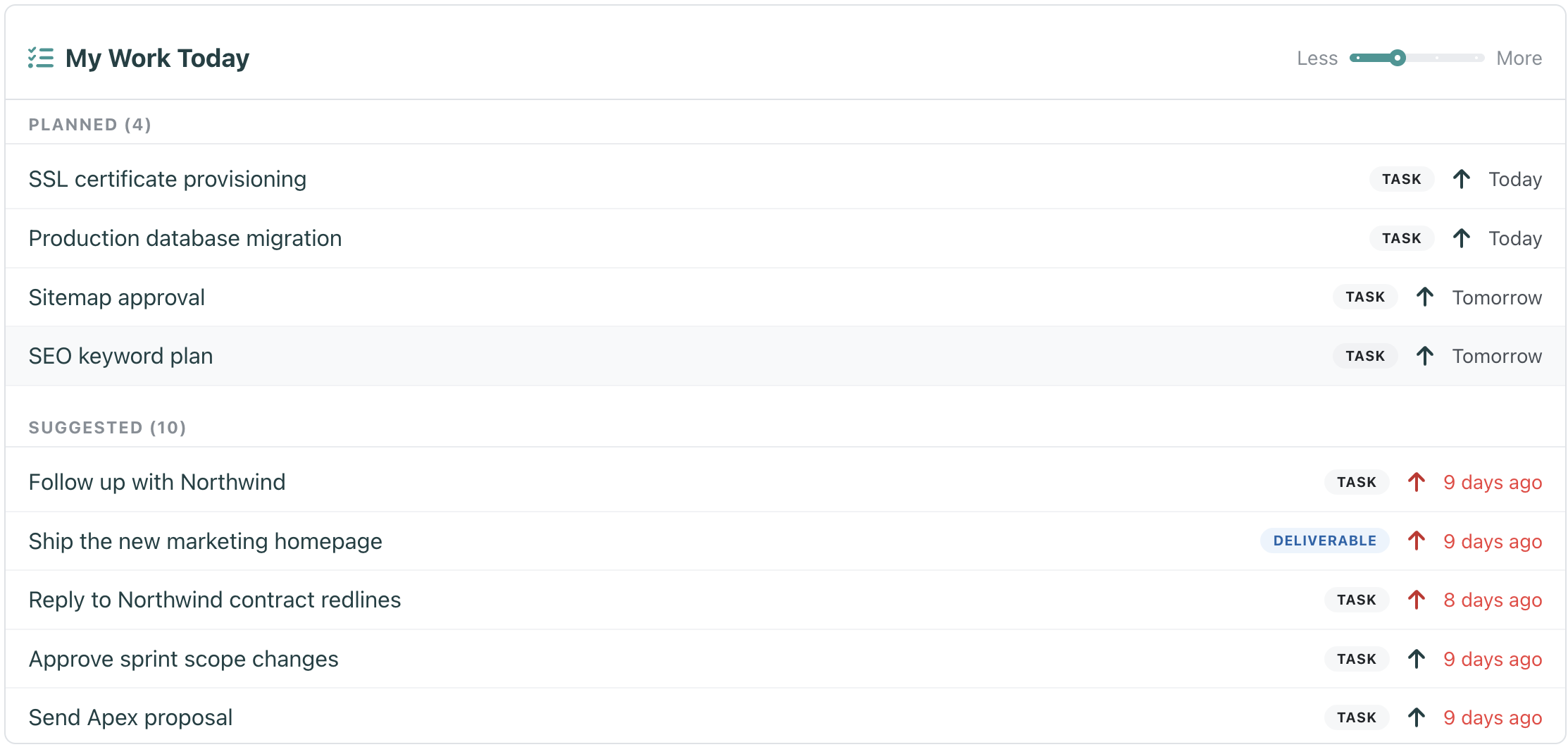
The My Work Today widget on the SRP dashboard, with Planned and Suggested sections and a Less-to-More density slider

Plan your day with My Work Today

Every morning starts with the same small ritual. You open your work, look at everything you could possibly do, and try to decide what you will actually do. For most tools that means scanning a few boards, eyeballing due dates, and holding the plan in your head until lunch undoes it.

We wanted that ritual to take ten seconds, not ten minutes. So we built My Work Today, a new widget that lives right on your dashboard.

June 20, 2026 · 2 min · SRP Team
The SRP logo mark on a white rounded tile, above the words "Why I built SRP" and "Founder notes — Alexander Lolis" on a warm cream ground

Why I built SRP

I didn’t set out to build another project management tool. There are enough of those. I set out to kill the management nobody needs: the check-ins, the status-chasing, the meeting you run just to find out what’s behind. And to help teams keep their rhythm and momentum.

For years, the rhythm of running projects looked the same no matter what tool I was using. Monday morning, get everyone in a room, or a call, and go around the table: what are you working on, what’s blocked, what’s slipping. By the time we’d finished, we knew what was behind. The problem is that “by the time we’d finished” was already too late. The thing that slipped had been slipping for days. The meeting didn’t catch it. The meeting just told me it had already happened.

June 17, 2026 · 5 min · Alexander Lolis
SRP and GitLab logos joined by a sync badge, with the headline "SRP now connects to GitLab"

SRP Now Connects to GitLab

Every PM knows the quiet tax of running work across two tools. The engineers live in GitLab. The plan lives somewhere else. And keeping the two in sync means chasing people to update a board they will never love, or doing it yourself. Nobody does it reliably, so the plan is always a little bit wrong.

Our first integration is here to end that. SRP now connects to GitLab.

June 9, 2026 · 2 min · SRP Team
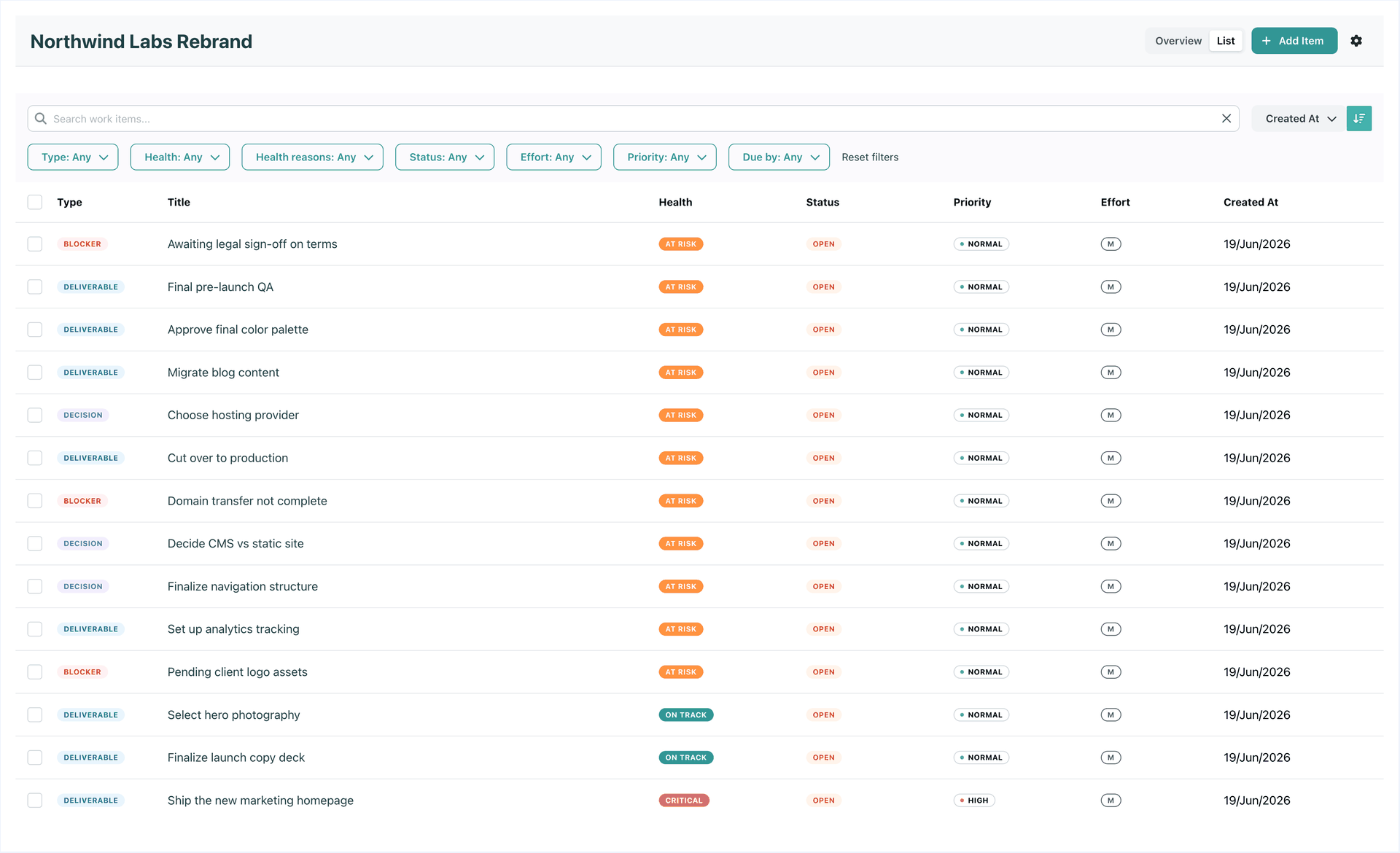
An initiative's work items in SRP, with deliverables, decisions, and blockers in one list

Introducing Work Initiatives

Tasks are great at answering “what am I doing?” They are terrible at answering “what are we actually trying to achieve?” That second question is the one stakeholders ask, the one that decides whether a quarter went well, and the one no task board has ever answered cleanly.

So we built the layer that does. Say hello to Initiatives.

June 3, 2026 · 4 min · SRP Team