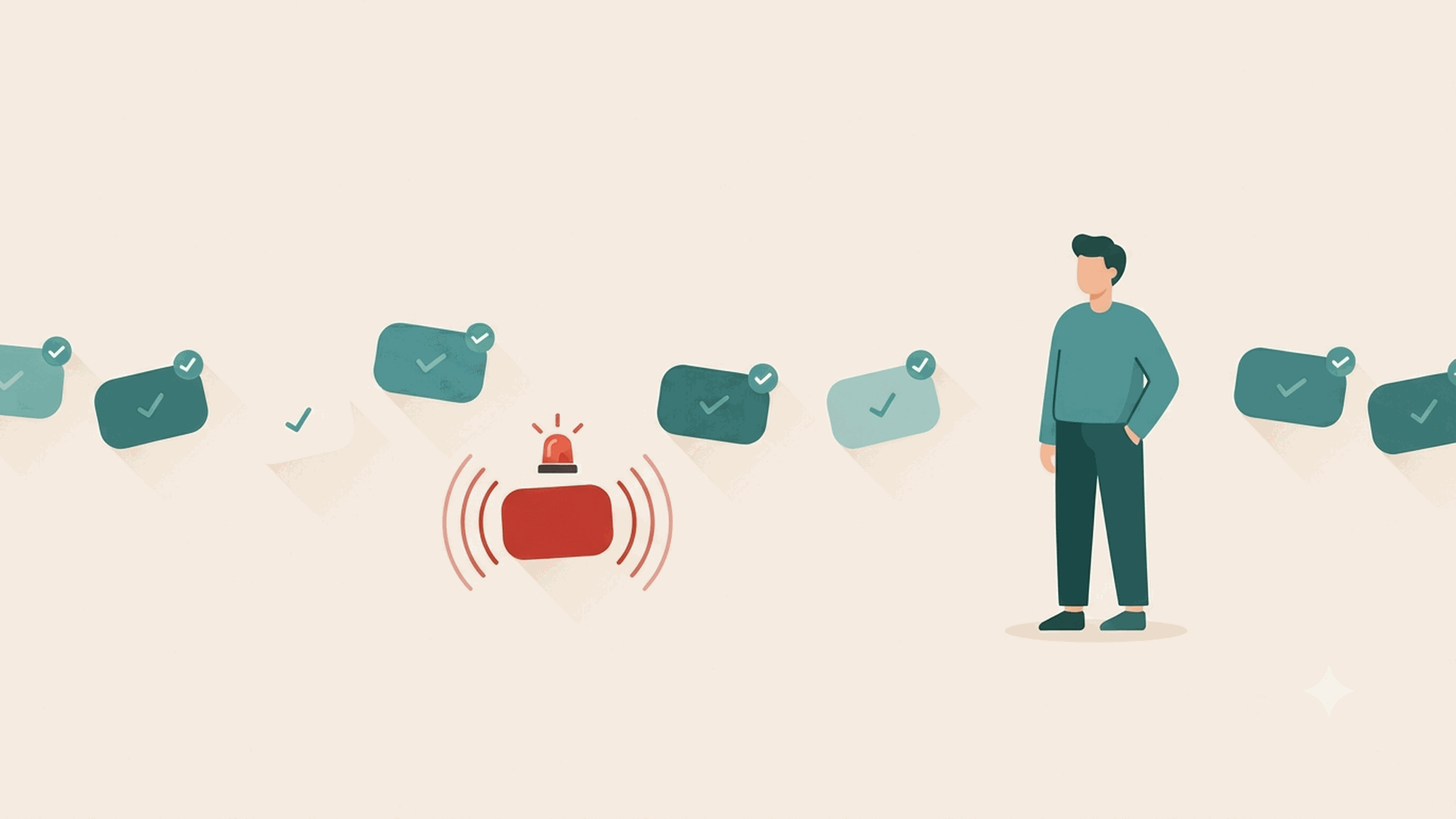
Every plan to stop projects from slipping arrives as one of two promises, and both let you down. The first is a better tool: buy something powerful enough and the slips stop. They don’t, they just get more places to hide. The second is discipline: train the team, run the governance, keep the register current, and reliability follows. That one is closer to right, and it is where most serious teams land. But it hides a catch that only shows up on a busy Tuesday, because there are two very different things wearing the word governance, and only one of them was ever going to hold.
Governance is two machines, not one
Pull governance apart and you find two machines sharing a name.
One is decision rights: who approves the budget, signs off a scope change, has the authority to kill a project that should die. It runs on events, a gate, a sign-off, a steering meeting, so it does not depend on anyone being disciplined every day, and when it is missing you feel it fast. Keep this half. A project rolls better when someone holds the line, and nothing here argues otherwise.
The other is monitoring: the status report, the weekly register update, the red-amber-green board someone recolours by hand, the review whose whole job is to answer where we are and what is at risk. This half runs on habit. It only tells the truth if busy people feed it honestly, every day, under deadline. And it fails exactly where you need it most. The disciplined team that keeps it current never needed the report, and the team drowning fills the board with fiction, because updating it is the first thing to go when the week gets hard.
You can’t report your way to reliability
So the monitoring half asks people to be reliable at a chore that has nothing to do with the actual work, then treats the output as the truth. Reliability that depends on everyone remembering to keep a board current is not reliability. It is a hope with a dashboard on top.
This is not a knock on the people. They are not careless. They are human and busy, and holding a whole project in your head so you can transcribe it into a tool every Friday is not a reasonable thing to ask of anyone. The failure is structural: you built your early-warning system out of human attention, the one material that gives way under load.
The fix isn’t more discipline. It’s a system that notices.
What replaces the monitoring half is not a harder push to keep the board current. It is a system that watches the work and tells you, on its own, the moment something slips. Status is not typed, it is derived from the work itself, a blocker still open, a date that passed, a decision gone quiet, a dependency that crossed between two people and stalled. Nobody has to remember to look, because the system is the thing that looks, and when something goes wrong it comes and says so.
This is push instead of pull, told from the governance side. A pull tool waits for you to come ask. This one notices and speaks up, which is what makes the warning trustworthy instead of nagging: it does not lean on the discipline that was already failing. The default flips. You get told. You do not go digging.
The human governs, the system watches, the work flows
This does not remove the person who forces the governance. That person is good for a project, and the system does not replace them, it arms them. It hands whoever is accountable a true read of what is slipping without making them chase it, and it hands the people doing the work their evenings back, because they are no longer feeding a reporting machine to prove they are on track.
The human governs. The system watches. The work flows. One person still owns the decisions, and nobody has to be the living memory of every project just to keep the truth visible.
The honest boundary
None of this works around a team that will not touch the tool at all. If people never use it, no system can watch work it never sees, and software makes an existing capability durable rather than conjuring one from nothing. But if your team is willing, and most are, the move is not more governance and it is not less. It is to stop asking people to be the system, and to build one that notices so nobody has to be.