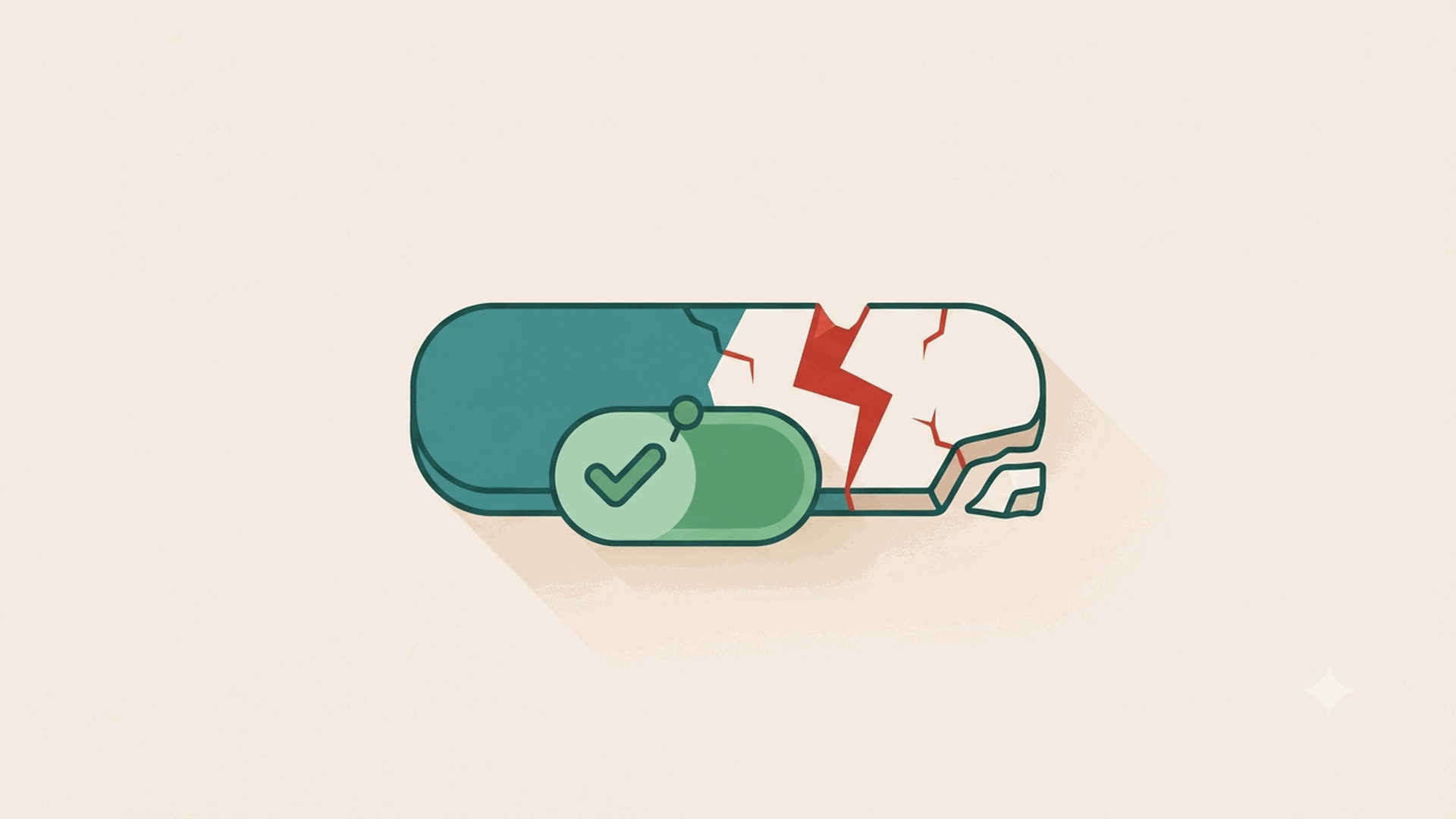
On Friday the board was green. Every card on track, the client update sent, everyone offline for the weekend. By Tuesday the project was on fire, and when you scrolled back through the tool, nothing had changed between the two. It just sat there green while the work quietly came apart. The easy explanation is that someone forgot to move a card. But this happens to careful teams too, and it keeps happening, which means the problem is not discipline. It is what a status actually is. In most tools the thing that tells you a task is at risk is a field a person types, and a typed status has a fatal property: the only thing that changes it is a human noticing. The update and the noticing are the same event.
The update and the noticing are the same event
Sit with that, because it is the whole problem. A status field only moves when a person decides to move it. So the value can never appear before someone has already seen the trouble and reached for the field. On track means on track as of the last time a human looked, which might have been before the blocker landed, before the date moved, before the dependency stalled.
Early warning means the system knows before you would have. A typed field cannot, by definition, because the act that updates it is you finding out. By the time the label turns red, you already knew. The board was never an early-warning system. It is a place to write down warnings you already have.
You cannot out-discipline it
Notice this survives a perfectly diligent team. Even if everyone updates the instant they notice, the field still only ever reflects what a human has already noticed. Better habits make the record more current. They cannot make it early, because early means before a person clocks the problem, and a person clocking it is the only input the field has. This is not laziness you can train away. It is a circular definition, and you cannot out-discipline a circle.
Early warning has to be derived
The only way out is to stop storing the verdict and start computing it from things the tool already holds and never had to be told. A task has an open blocked-by link, so it is blocked. A due date passed and it is not done, so it is overdue. Nothing has touched it in a stretch that is long for this kind of work, so it is stale. An iteration is burning down slower than its days allow, so it is behind. None of these wait for a person to notice. The system checks them on every change and on a schedule, so it can fire the moment a condition crosses the line, which is the moment before anyone would have caught it by hand. That is the whole computed, push side of pull versus push, and it is why the difference between early and late is a property of the data model, not the team.
What it changes
You stop opening the tool to check and learning, at the checking, that something went wrong a week ago. The tool comes to you when the first signal trips, while there is still room to act. Nobody got more diligent. The noticing just moved off people and into something that never looks away.
That is what SRP does. There is no status field for anyone to keep honest. It reads the work, computes what is at risk, and tells you, early enough to matter.